Blog :: 11-2022

Why There Won't be a Flood of Foreclosures in Boston or Elsewhere

Why There Won’t Be a Flood of Foreclosures Coming to the Housing Market

Why There Wont Be a Flood of Foreclosures Coming to the Housing Market | MyKCM
 

Courtesy of Keeping Current Matters.

With the rapid shift that’s happened in the housing market this year, some people are raising concerns that we’re destined for a repeat of the crash we saw in 2008. But in truth, there are many key differences between what’s happening today and the bubble in the early 2000s.

One of the reasons this isn’t like the last time is the number of foreclosures in the market is much lower now. Here’s a look at why there won’t be a wave of foreclosures flooding the market.

Not as Many Homeowners Are in Trouble This Time

After the last housing crash, over nine million households lost their homes due to a foreclosure, short sale, or because they gave it back to the bank. This was, in large part, because of more relaxed lending standards where people could take out mortgages they ultimately couldn’t afford. Those lending practices led to a wave of distressed properties which made their way into the market and caused home values to plummet.

But today, revised lending standards have led to more qualified buyers. As a result, there are fewer homeowners who are behind on their mortgages. As Marina Walsh, Vice President of Industry Analysis at the Mortgage Bankers Association (MBA), says:

For the second quarter in a row, the mortgage delinquency rate fell to its lowest level since MBA’s survey began in 1979 – declining to 3.45%. Foreclosure starts and loans in the process of foreclosure also dropped in the third quarter to levels further below their historical averages.”

There Have Been Fewer Foreclosures over the Last Two Years

While you may have seen recent stories about the number of foreclosures rising today, context is important. During the pandemic, many homeowners were able to pause their mortgage payments using the forbearance program. The program gave homeowners facing difficulties extra time to get their finances in order and, in many cases, work out a plan with their lender.

With that program, many were concerned it would result in a wave of foreclosures coming to the market. That fear didn’t materialize. Data from the New York Fed shows there are still fewer foreclosures happening today than before the pandemic (see graph below):

Why There Wont Be a Flood of Foreclosures Coming to the Housing Market | MyKCM

That means, while there are more foreclosures now compared to last year (when foreclosures were paused), the number is still well below what the housing market has seen in a more typical year, like 2017-2019.

And most importantly, the number we’re seeing now is still far below the number we saw during the market crash (shown in the red bars in the graph). The big takeaway? Don’t let a headline in the news mislead you. While foreclosures are up year-over-year, historical context is essential to understanding the full picture.

Most Homeowners Have More Than Enough Equity To Sell Their Homes

Many homeowners today have enough equity to sell their homes instead of facing foreclosure. Due to rapidly rising home prices over the last two years, the average homeowner has gained record amounts of equity in their home. And if they’ve stayed in their homes even longer, they may have even more equity than they realize. As Ksenia Potapov, Economist at First Americansays:

Homeowners have very high levels of tappable home equity today, providing a cushion to withstand potential price declines, but also preventing housing distress from turning into a foreclosure. . . the result will likely be more of a foreclosure ‘trickle’ than a ‘tsunami.’”

A recent report from ATTOM Data explains it by going even deeper into the numbers:

“Only about 214,800 homeowners were facing possible foreclosure in the second quarter of 2022, or just four-tenths of one percent of the 58.2 million outstanding mortgages in the U.S. Of those facing foreclosure, about 195,400, or 91 percent, had at least some equity built up in their homes.”

Bottom Line

If you see headlines about the increasing number of foreclosures today, remember context is important. While it’s true the number of foreclosures is higher now than it was last year, foreclosures are still well below pre-pandemic years. If you have questions, let’s connect.

Top Questions About Selling Your Home This Winter

Top Questions About Selling Your Home This Winter | MyKCM
 

There’s no denying the housing market is undergoing a shift this season, and that may leave you with some questions about whether it still makes sense to sell your house. Here are three of the top questions you may be asking – and the data that helps answer them – so you can make a confident decision.

1. Should I Wait To Sell?

Even though the supply of homes for sale has increased in 2022, inventory is still low overall. That means it’s still a sellers’ market. The graph below helps put the inventory growth into perspective. Using data from the National Association of Realtors (NAR), it shows just how far off we are from flipping to a buyers’ market:

Top Questions About Selling Your Home This Winter | MyKCM

While buyers have regained some negotiation power as inventory has grown, you haven’t missed your window to sell. Your house could still stand out since inventory is low, especially if you list now while other sellers hold off until after the holiday rush and the start of the new year.

2. Are Buyers Still Out There?

If you’re thinking of selling your house but are hesitant because you’re worried buyer demand has disappeared in the face of higher mortgage rates, know that isn’t the case for everyone. While demand has eased this year, millennials are still looking for homes. As an article in Forbes explains:

At about 80 million strong, millennials currently make up the largest share of homebuyers (43%) in the U.S., according to a recent National Association of Realtors (NAR) report. Simply due to their numbers and eagerness to become homeowners, this cohort is quite literally shaping the next frontier of the homebuying process. Once known as the ‘rent generation,’ millennials have proven to be savvy buyers who are quite nimble in their quest to own real estate. In fact, I don’t think it’s a stretch to say they are the key to the overall health and stability of the current housing industry.”

While the millennial generation has been dubbed the renter generation, that namesake may not be appropriate anymore. Millennials, the largest generation, are actually a significant driving force for buyer demand in the housing market today. If you’re wondering if buyers are still out there, know that there are still people who are searching for a home to buy today. And your house may be exactly what they’re looking for.

3. Can I Afford To Buy My Next Home?

If current market conditions have you worried about how you’ll afford your next move, consider this: you may have more equity in your current home than you realize.

Homeowners have gained significant equity over the past few years and that equity can make a big difference in the affordability equation, especially with mortgage rates higher now than they were last year. According to Mark Fleming, Chief Economist at First American:

“. . . homeowners, in aggregate, have historically high levels of home equity. For some of those equity-rich homeowners, that means moving and taking on a higher mortgage rate isn’t a huge deal—especially if they are moving to a more affordable city.” 

Bottom Line

If you’re thinking about selling your house this season, let’s connect so you have the expert insights you need to make the best possible move today.

Home Equity: A Source of Strength for Homeowners Today

Home Equity: A Source of Strength for Homeowners Today | MyKCM
 

Experts agree there’s no chance of a large-scale foreclosure crisis like we saw back in 2008, and that’s good news for the housing market. As Mark Fleming, Chief Economist at First Americansays:

“. . . don’t expect a housing bust like the mid-2000s, as lending standards in this housing cycle have been much tighter and homeowners have historically high levels of home equity, so there likely won’t be a surge in foreclosures.”

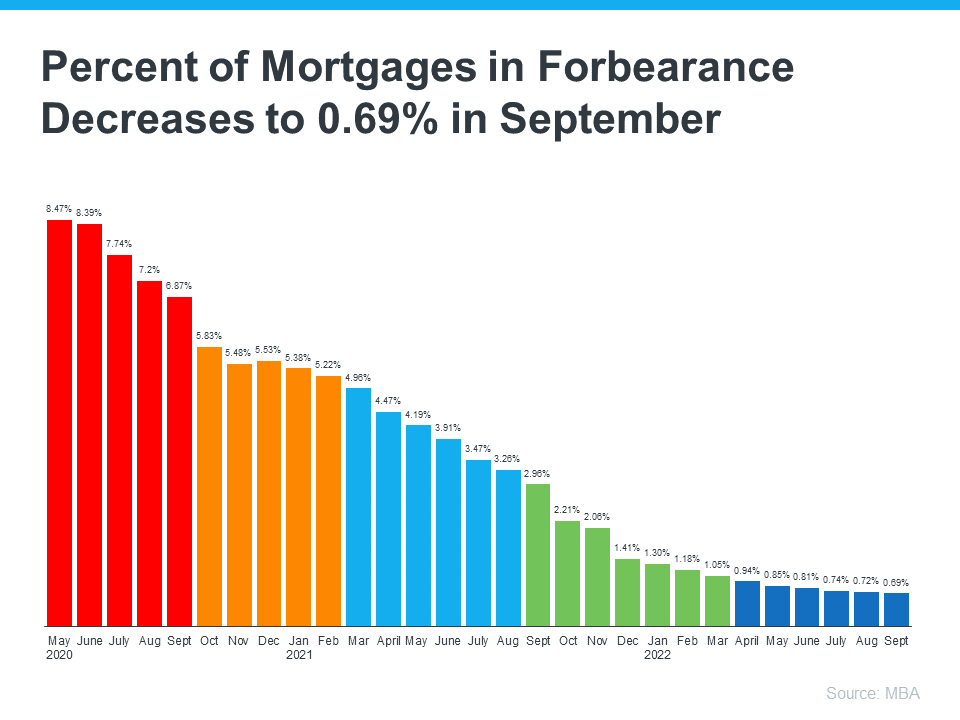
Data from the Mortgage Bankers Association (MBA) helps tell this story. It shows the overall percentage of homeowners at risk is decreasing significantly with time (see graph below):

Home Equity: A Source of Strength for Homeowners Today | MyKCMBut even though the volume of homeowners at risk is very low, there is still a small percentage of homeowners who may be coming face to face with foreclosure as a possibility today. If you’re facing difficulties yourself, it can help to understand your options. It starts with knowing what foreclosure is. Investopedia defines it like this:

Typically, default is triggered when a borrower misses a specific number of monthly payments . . . Foreclosure is the legal process by which a lender attempts to recover the amount owed on a defaulted loan by taking ownership of and selling the mortgaged property.

The good news is there are alternatives available to help you avoid going through the foreclosure process, including:

  • Reinstatement
  • Loan modification
  • Deed-in-lieu of foreclosure
  • Short sale

But before you go down any of those paths, it’s worth seeing if you have enough equity in your home to sell it and protect your investment.

You May Be Able To Use Your Equity To Sell Your House

Equity is the difference between what you owe on the home and its market value based on factors like price appreciation.

In today’s real estate market, many homeowners have far more equity in their homes than they realize due to the home price appreciation we’ve seen over the past few years. According to CoreLogic:

“The total average equity per borrower has now reached almost $300,000, the highest in the data series.”

So, what does that mean for you? If you’ve lived in your house for at least a few years or more, chances are your home’s value, and your equity, has risen dramatically. In addition, the mortgage payments you’ve made during that time chipped away at the balance of your loan. If your home’s current value is higher than what you still owe on your loan, you may be able to use that increase to your advantage.

Rick Sharga, Executive VP of Market Intelligence at ATTOM Dataexplains how equity can help:

“Very few of the properties entering the foreclosure process have reverted to the lender at the end of the foreclosure. . . We believe that this may be an indication that borrowers are leveraging their equity and selling their homes rather than risking the loss of their equity in a foreclosure auction.”

Lean on Experts To Explore Your Options

To find out how much equity you have, work with a local real estate professional. They can give you an estimate of what your house could sell for based on recent sales of similar homes in your area. You may be able to sell your house to avoid foreclosure.

If you find out you have to pursue other options, your agent can help with that too. They’ll be able to connect you with other professionals in the industry, like housing counselors, who can look into your unique situation and offer advice on next steps if selling isn’t your best alternative.

Bottom Line

If you’re a homeowner facing hardship, let’s connect so you have an expert on your side to explore your options and see if you can sell your house to avoid foreclosure.

    Comments

    1. No comments. Be the first to comment.

    Real Estate Investment: Basic Cash Flow Metrics

    Real Estate investment in Boston

    Real estate investment, just like any other kind of investment, comes with its own set of risks and rewards. Being armed with the correct information and knowing how to deploy it makes the process much easier and more predictable. 

    There are many different modalities of real estate investment. But it’s probably obvious that the primary financial objectives are cash flow from rents, and then capital gain from a sale. Additionally investing in real estate can provide significant tax advantages.

    Today we are going to talk about some of the basic terminology and metrics involved in the cash flow of a real estate investment. The same basic concepts apply whether the investment is a small studio in the Back Bay or a 75-unit apartment building in the suburbs. 

    The below spreadsheet is for a condo purchase, just to keep it simple. Also, it’s a cash purchase. As we’ll see in a later example, this purchase (as with many potential investment purchases in the downtown neighborhoods) may not work with financing.

    • 1. Gross Scheduled Income: As the name implies, this is the total on-paper income that your lease(s) says that you will be receiving.
    • 2. Gross Operating Income: This is the GSI minus 5% for potential vacancy. In Boston right now, it is unlikely that if your property is priced correctly and located and presented well, that you will have any vacancy. To my experience 5% is a pretty standard figure to use in these calculations. Many people like to use 8% for an approximate 1 month vacancy. If you are going to purchase and then take a month or two for improvements, you will want to figure that separately for your first year. 
    • 3. Net Operating Income (NOI): This is the coin of the realm. As the name implies, it is what is left over after you subtract your regular operating expenses (excluding financing) from GOI.
    • 4. Expenses: Generally, if you are looking at a multi-unit building being offered for sale, you will probably be offered a pro-forma, listing the expenses of the building over the last year. 

    I can’t overstate how much that the pro forma needs to be the subject of much scrutiny and skepticism. Your due diligence is very  much required. And many times, the pro-forma will say just that, relieving the sellers of liability for misrepresentation. I can help.

    As I said, this sheet details the expenses of a small condo. For a larger building, there may be other details, such as accounting, management fees, snow removal, landscaping, etc. 

    Also, this sheet excludes any other initial expenses you may undertake. In many cases, the rationale for purchasing a particular property, such as a rental building would be to improve it, then rent and hold.

    It is important to remember that most of your expenses will be tax-deductible as well, which is one of the big advantages of real estate investment. The profit doesn’t come solely from the sale, but also from the cash flow, which is leveraged by the tax advantage.

    • THE METRICS: How can we compare potential investments to one another?
    •     5Capitalization Rate (Cap Rate): This is really the gold standard for comparing one real estate investment vehicle to another. It compares the NOI to the price paid for the property. In this case, the Cap Rate is 3.37, meaning that the NOI for the year is 3.37% of the price paid. Once again, it leaves any financing considerations, because it is used purely to compare one property to another. In the Boston area, if you can find a 5 cap, buy it! Or tell me about it so I can! Once you know the NOI of a property and you've established what you should expect the Cap Rate to be, you can calculate the value of the property using the formula NOI=Rate X Value. In other words, NOI/Rate=Value. So if the property has an NOI of $24,700 and the market Cap Rate is about 4 (.04), the value is $617,500. If you need a higher cap, the value to you would be lower, as in our spreadsheet scenario
    •      6. Cash Flow: NOI minus financing costs.
    •      7. Cash-on-Cash-Rate of Return (COCROR): This is essentially the same as Cap Rate, but it takes into account financing expenses, which can quickly turn an otherwise fantastic investment into a no-go, particularly these days. Take a look at the financed version of this purchase. In order to make this purchase carry itself, there would have to be around 40%+- down at the interest rate listed. And looking at the COCROR, you would obviously not be purchasing this property for the immediate cash flow. Are there other considerations, such as rising values in the area over the next few years? Can the properly easily be spruced up at low cost in order to juice up the rents? Also, any initial fix-up expenses should be calculated into your first year COCROR.

    •      8. Gross Rent Multiplier (GRM): This is a commonly used metric, mostly used for on-the-fly, back-of-the-envelope valuation. The calculation is as follows: Gross Rent Multiplier = Sale Price/Gross Scheduled Income. One use of GRM is to calculate what you should expect that the the gross scheduled income should be based upon the market. So if you know the price of a property is $500,000 and the average GRM in that market is 10,  divide the price by the GRM to get the total amount of Gross Scheduled Income you should be able to expect in that market at that price, which is $50,000/year. So you need to determine if in reality, you can actually do that. You can also use this formula to determine what a property's purchase price should be based upon the value of the leases in place. 
    •      Cap Rate vs GRM: Cap rate is a much more valuable tool to use in valuation, because it takes into account the Net Operating Income rather than the Gross Scheduled Income. But GRM, once again, is a good basic tool to use at the beginning of your vetting process, prior to receiving all the details.

     More complex investments: What we just discussed were basic cash flow metrics. There are other metrics that come into play for other types of real estate investment. Suppose you're thinking of purchasing a three family with three two bedroom units for $1m, with current leases totalling $6k/mo. Suppose you do $80,000 in renovations after the individual leases run out, gaining you another $200 per month in rent for each unit? Is it worth it? How will that impact the building's resale value? Do you want to convert to condos? What are the tax implications? 

    You get the idea. More to come....

      Comments

      1. No comments. Be the first to comment.